
A specific question comes up often enough among our Madison clients that it deserves its own direct answer here: “I’ve lost the weight, so why doesn’t my skin look the way I expected it to once I got there?” This is a genuinely common experience, and it tends to catch people off guard after they’ve put in months of real, disciplined effort toward a weight loss goal, only to find that the result includes some degree of looser, less firm skin in areas where volume has changed significantly over that same period of time. Nobody really warns you about this part going in, and it can feel like an unfair consequence of doing exactly what you set out to do.
We talk through this regularly with Madison clients who’ve gone through our medical weight loss program, lost a meaningful amount of weight through GLP-1 medications like semaglutide or tirzepatide, and then found themselves wondering what comes next for the skin that didn’t quite keep pace with the change happening underneath it. The good news is that this is a genuinely solvable problem, and it’s one we’re specifically equipped to address as a natural continuation of the work we’ve already done together throughout your program.
Why Skin Laxity Happens After Significant Weight Loss
Skin has a certain amount of elasticity, supported by collagen and elastin fibers that allow it to stretch and, ideally, contract back into place as your body’s volume changes over time. When weight loss happens gradually over many months, skin often has more time to adjust along the way as the process unfolds. But even gradual weight loss can outpace skin’s natural ability to fully retract, particularly in areas like the face, neck, and midsection, and particularly for clients who’ve carried excess weight for a longer period of time before starting their weight loss journey with us.
This isn’t a failure of your weight loss program, and it isn’t something diet or exercise can fully correct on its own once it’s already happened to a meaningful degree. It’s simply a separate concern that requires its own targeted treatment, and we think it’s worth addressing directly rather than leaving clients to feel like their weight loss success came with an unexpected, unaddressed downside they have to simply live with indefinitely.
Scarlet RF Microneedling as a Natural Next Step
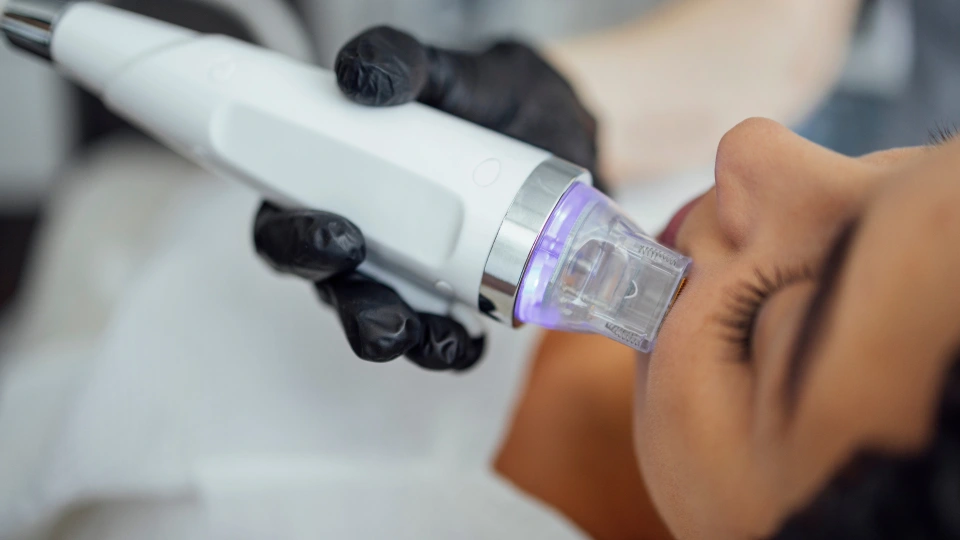
For clients dealing with facial or neck laxity specifically after weight loss, Scarlet RF Microneedling has become one of our most frequently recommended follow-up treatments for exactly this situation. It combines traditional microneedling, which uses fine needles to create controlled micro-injuries that stimulate collagen and elastin production, with radiofrequency energy delivered through those same needles into the deeper layers of skin. That RF energy generates heat, causing an immediate contraction of existing collagen fibers, with a more gradual remodeling response continuing to build over the following weeks.
A series of three sessions spaced about four weeks apart tends to produce the most noticeable, lasting improvement for clients in this particular situation. Most experience 24 to 48 hours of redness afterward, similar to a moderate sunburn, with minimal disruption to normal daily activities beyond that initial recovery window.
What to Expect During Your Skin Consultation
If you’ve recently completed or are nearing the end of a weight loss program, whether through our practice or elsewhere, we’re happy to evaluate your skin and talk through realistic options even if you’re not an existing Glo client. We’ll look at the specific areas of concern, discuss how much laxity is present, and talk through whether Scarlet RF Microneedling alone is likely to produce the improvement you’re hoping for, or whether a combination of treatments might serve you better depending on the severity and location of the laxity.
It’s worth setting realistic expectations upfront. Scarlet RF Microneedling works best for early-to-moderate skin laxity, and clients with more significant, advanced loose skin after substantial weight loss may find that non-surgical options provide meaningful but incomplete improvement compared to what a surgical procedure could achieve. We’ll always be honest about this distinction during your consultation rather than promising a non-surgical treatment can fully replicate surgical results it simply isn’t designed to achieve.
Common Questions From Madison Clients About Post-Weight-Loss Skin Treatment
We hear a number of recurring questions from clients in this exact situation. A frequent one involves timing: how long should someone wait after reaching their goal weight before starting a skin treatment series. We generally recommend waiting until your weight has been stable for at least a few weeks, since treating skin that’s still actively adjusting to ongoing changes tends to produce less predictable, less satisfying results than treating skin once your body has settled into a new baseline.
Another common question involves whether results from Scarlet RF Microneedling are permanent once treatment is complete. Results build over time and tend to last a year or more for many clients, though continued natural aging means most people benefit from periodic maintenance sessions to sustain the improvement over the following years rather than expecting one series to last indefinitely without any further treatment.
Other Skin Health Services Worth Considering
Beyond Scarlet RF, our medical-grade facials and chemical peels can support overall skin health and texture during and after a weight loss journey, helping address dullness or textural changes that sometimes accompany rapid changes in diet and metabolism throughout the process. We’ll talk through which combination of services actually makes sense for your specific skin and your specific timeline during a follow-up consultation, rather than assuming every weight loss client needs the exact same additional treatment regardless of their individual results and circumstances.
Why We Address This Proactively With Weight Loss Clients
A lot of medical weight loss programs end the relationship once a client reaches their goal weight, treating the skin and aesthetic side of the journey as someone else’s problem to solve separately and on their own. We don’t think that’s the right approach. Since we’re already managing your labs and tracking your progress throughout the weight loss process, we’re in a good position to anticipate this concern and talk through it before it becomes a frustrating surprise after the fact, once your weight loss goals have already been achieved.
This is part of the broader whole-person philosophy we bring to every single client relationship at Glo, regardless of which service originally brought them through our doors. Weight loss, skin health, and hormone balance are genuinely connected, and treating them as a continuous relationship rather than a series of disconnected, one-off services tends to produce a more complete, more satisfying outcome overall for the client.
What This Combined Approach Looks Like in Practice
A number of our Madison clients who’ve completed a significant weight loss journey with us transition directly into a Scarlet RF series once their weight has stabilized, timing the skin treatment to begin once their weight loss has largely plateaued rather than starting while their body composition is still actively changing week to week. We find this sequencing tends to produce better, more predictable results than starting skin tightening treatment too early, before your body has had a genuine chance to settle into its new baseline and adjust fully.
Getting Started From Madison
Glo Medical Aesthetics & Wellness is located at 320 Belle Meade Point, Suite C in Flowood, about 20 to 25 minutes from most of Madison via I-55, an easy enough trip to fit into a follow-up visit after your weight loss program. We’re open Monday through Friday, 8:30 AM to 5:00 PM, and closed on weekends. Call 769-267-5586 or book your consultation online at glo-medaesthetics.com, whether you’re just starting a weight loss journey or already wondering what comes next for your skin once the weight itself is no longer the primary concern.