
Yes, Botox can absolutely look natural. It really comes down to three things: how much product is used, exactly where it’s placed, and whether your injector actually understands your face instead of treating it like everyone else’s. That’s the honest, short answer.
But here’s why so many people still hesitate before their first appointment. They’ve seen the photos. The eyebrows that don’t move. The forehead that looks shiny and stiff, like a mask instead of a face. And they think, understandably, I don’t want that.
What most people actually want is simpler than they realize. They want to look like themselves on a good day, rested, a little less tired around the eyes, without the deep line between the brows that makes them look angry when they’re not. They don’t want to erase every wrinkle. They want their face to still move when they laugh at something genuinely funny.
That’s the real goal of natural-looking Botox: softened lines, not a frozen forehead. At Glo-Med Aesthetics & Wellness in Flowood, we treat this as a planning problem first and an injection second. Dosage, facial anatomy, and what you actually want to preserve all get discussed before a needle comes near your face.
Can Botox Really Look Natural?
Yes. Natural results happen when Botox is used strategically, not maximally. The confusion usually comes from thinking of Botox as one standard treatment that produces one standard look. It isn’t. The same product, injected differently into two different faces, can produce completely different outcomes.
What Does Natural-Looking Botox Actually Mean?
In practice, it means your forehead can still raise slightly when you’re surprised. It means your smile lines soften without your whole face going quiet. It means someone looking at you might say you look well rested without being able to say exactly why. Natural results preserve expression, balance movement across the face, and refresh rather than reconstruct.
Why Natural Does Not Mean Completely Wrinkle-Free
Here’s something worth saying plainly: chasing perfectly smooth skin is often what leads people toward that stiff, overdone look in the first place. A few faint lines when you smile big are normal. They’re part of having a face that actually expresses things. The goal is softening the deep, resting lines, not erasing every trace of movement.
How Facial Movement Affects Your Results
Botox works by temporarily reducing activity in targeted muscles. The muscles you use constantly frowning, raising your brows, and squinting in sunlight are the ones creating those lines to begin with. Treating them appropriately reduces the line without shutting down the movement that created your natural expressions in the first place.
Why Does Botox Sometimes Look Frozen?
This is worth breaking down honestly, because a frozen look is rarely one single mistake. It’s usually a stack of smaller ones.
Too Much Muscle Relaxation
Using more product than a face actually needs is probably the single biggest cause. More units don’t mean better results. It means more muscle activity gets shut down, sometimes far more than intended.
Incorrect Injection Placement
Even a well-dosed treatment can look wrong if it’s placed slightly off. Facial muscles overlap and interact with each other. A few millimeters can be the difference between a lifted brow and a heavy one.
Treating Areas That Do Not Need Treatment
Not every visible line needs Botox. Some lines are better left alone or are better addressed with a different treatment entirely. Injecting everywhere just in case is how faces end up looking overworked.
Ignoring Individual Facial Anatomy
Muscle strength varies a lot from person to person. So does brow shape, facial proportion, existing asymmetry, and skin thickness. A dosage that looks perfect on one face can look heavy-handed on another. This is exactly why a cookie-cutter injection map tends to produce cookie-cutter, artificial-looking results.
Failing to Consider Brow Position
Forehead treatment affects more than the forehead. It can shift how the brows sit, sometimes lifting them, sometimes flattening the arch. Skipping this consideration is a common reason people end up with brows that look strangely straight or unusually high.
How Do You Avoid a Frozen Botox Appearance?
This is the part that actually matters day to day, so let’s get practical.
Choose an Experienced Medical Injector
Training and hands-on experience with facial anatomy make a real difference here. An experienced injector isn’t just following a standard pattern; they’re reading your specific face and adjusting the plan to it.
Start With a Conservative Treatment Approach
It’s much easier to add more product at a follow-up appointment than it is to undo an overly strong result. Starting conservative, especially on a first treatment, gives you room to see how your face responds before committing to more.
Tell Your Injector How Much Movement You Want to Keep
Say it out loud, in plain terms. “I want to look refreshed, not different.” “I still want my eyebrows to move when I talk.” “I don’t want a frozen forehead.” “I’d rather it be subtle.” A good injector wants this information; it directly shapes the plan.
Give Botox Time to Develop
Results build gradually over about one to two weeks. Judging the outcome on day two or three, before it’s fully settled, tends to create unnecessary worry.
Schedule a Follow-Up When Appropriate
Reassessment two to three weeks out lets your provider make small refinements if something feels slightly off. This isn’t a failure of the first treatment; it’s part of doing it well.
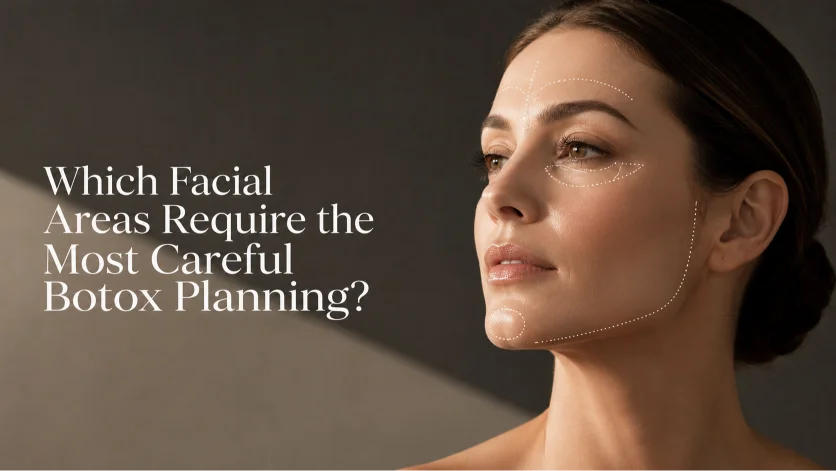
Which Facial Areas Require the Most Careful Botox Planning?
Forehead Lines
The frontalis muscle controls brow movement, so treating it carelessly directly affects how expressive your upper face looks. Conservative treatment here matters more than almost anywhere else on the face.
Frown Lines Between the Eyebrows
The glabellar area, between the brows, is treated to soften those ’11’ lines without pulling the whole brow down or flattening natural expression.
Crow’s Feet
Around the eyes, the goal is softening the lines that show up when you smile, without dulling the smile itself. This area responds well to a lighter touch.
Brows and Overall Facial Balance
The forehead, glabella, and crow’s feet don’t work in isolation. They influence each other. That’s why the same injection pattern applied to every patient rarely produces balanced, natural results; anatomy has to guide the plan, area by area.
Can You Still Make Facial Expressions After Botox?
Yes, in most well-planned treatments. Botox reduces activity in the specific muscles it targets. It doesn’t switch off your whole face. You’ll still be able to smile, talk, and show surprise. What changes is the depth of the lines those movements used to create.
No movement at all isn’t actually the marker of successful Botox; it’s usually a sign of overtreatment. The better benchmark is softened lines with expression still intact.
What Does Botox Look Like During the First Two Weeks?
Immediately After Treatment
You might notice small injection marks, mild redness, or slight tenderness at the injection sites. This typically settles within a few hours.
First Few Days
Nothing dramatic happens yet. The effect builds gradually rather than showing up all at once.
Around One Week
Muscle relaxation becomes more noticeable, and lines start to visibly soften.
Around Two Weeks
This is usually the better point to judge your results once the treatment has fully settled into its final effect.
When to Contact Your Provider
Reach out if you notice unusual heaviness in the eyelid, uneven results that don’t seem to be settling, or anything that feels off compared to what was discussed beforehand.
Is Baby Botox More Natural Than Regular Botox?
Baby Botox generally refers to a more conservative dosing approach, using fewer units to create a lighter, more subtle effect. It’s a reasonable option for people who want minimal change or are trying Botox for the first time.
But fewer units alone don’t guarantee a natural look. Placement and technique still matter just as much. Baby Botox done without attention to individual anatomy can still look uneven. It’s not automatically safer or better; it’s simply one dosing strategy that fits certain goals and certain faces better than others.
What Should You Ask Your Botox Injector Before Treatment?
Questions About Treatment
- What areas do you recommend treating, and why?
- How much movement should I expect to keep?
- What results are realistic for my face specifically?
- How will you account for my facial anatomy?
- When should I judge my final result?
- What happens if the result feels too strong?
Questions About the Provider
- What medical qualifications do you hold?
- How much experience do you have with facial injectables?
- What products do you use?
- How do you personally approach natural-looking results?
Asking these upfront, before you’re in the treatment chair, tends to prevent most of the disappointment people report after Botox.
What If My Botox Looks Too Frozen?
Give the Treatment Time to Settle
Early results, especially in the first week, aren’t the final picture. Wait until closer to the two-week mark before deciding something’s wrong.
Speak With Your Injector
The provider who treated you is best positioned to assess it and explain what’s happening and whether a small adjustment would help.
Understand That Botox Is Temporary
Muscle activity gradually returns as the effect wears off, typically over three to four months. Nothing about it is permanent.
Avoid Trying to Correct It Yourself
Facial massage, extra products, or unqualified touch-ups aren’t reliable fixes and can occasionally make things worse. This is a conversation for your provider, not a DIY project.
How Long Does Natural-Looking Botox Last?
Most people see results for three to four months, though this varies. Muscle strength, the treated area, individual metabolism, and treatment history all play a role. Someone with strong forehead muscles may notice the effect fading sooner than someone with less muscle activity in that area.
Maintenance schedules should be based on how your own results wear off, not on an automatic countdown. Some people come back every three months. Others comfortably wait four or five.
What Is the Difference Between Natural Botox and Overdone Botox?
| Natural-Looking Botox | Overdone Botox |
|---|---|
| Softened lines | Excessively smooth appearance |
| Some facial movement remains | Limited facial movement |
| Balanced brows | Unusual brow positioning |
| Expressions remain recognizable | Expressions look restricted |
| Treatment is customized | Same approach used for everyone |
| Conservative dosing | Excessive product used |
| Refreshed appearance | Artificial or frozen appearance |
The Goal Is Not to Remove Every Line
Wrinkle reduction and complete immobility are two different things, even though they sometimes get treated as the same goal.
Why More Botox Is Not Always Better
More product doesn’t scale up to a better result the way people assume. Past a certain point, adding more only increases the risk of an artificial appearance, without adding meaningful benefit. This is one of those things that runs against the “more is better” instinct, but it holds up in practice.
How Do You Choose a Botox Provider in Flowood, MS?
Look for Medical Training and Experience
Facial anatomy knowledge isn’t optional here. It’s the entire foundation of a natural result.
Look for a Personalized Consultation
Treatment should start with an actual assessment of your face, not a standard injection map applied on autopilot.
Review the Provider’s Approach to Natural Results
Look for language around conservative treatment, facial balance, individualized plans, and patient education, rather than a one-size-fits-all sales pitch.
Consider the Overall Treatment Philosophy
This is where Glo-Med Aesthetics & Wellness in Flowood approaches things a little differently. Botox is treated as a planning conversation first, built around your specific anatomy and goals, rather than a fixed protocol applied to everyone who walks in. If you’re weighing options beyond Botox, it’s worth looking at Botox and other neurotoxin treatments to understand how they compare.

Why Choose Glo-Med Aesthetics & Wellness for Natural-Looking Botox?
Here’s the honest promotional part, and it’s a small one. Glo-Med Aesthetics & Wellness serves Flowood and the greater Jackson metro area with a treatment philosophy built specifically around avoiding that overdone look. Every appointment starts with a real consultation and a facial anatomy assessment, not a quick standard injection.
The practice leans conservative on dosing by design, adjusting gradually rather than treating aggressively out of the gate. Patients are walked through what to expect, when to judge their results, and what their options are if something needs fine-tuning. For anyone wanting to explore the fuller range of options available, personalized injectable treatments and dermal filler options are worth a look alongside Botox, and patients interested in longer-term collagen support sometimes ask about Sculptra treatments during their consultation.
The point of mentioning any of this isn’t to oversell Botox. It’s to say that the difference between a natural result and a frozen one usually comes down to exactly the kind of planning and communication described above, and that’s the standard this practice holds itself to.
Final Takeaway: Natural Botox Should Still Look Like You
The best Botox result isn’t the one people notice. It’s the one that just makes them think you look rested. That comes down to conservative dosing, precise placement, real attention to your facial anatomy, and honest conversation about what you actually want to keep.
If you’re considering Botox and want a treatment plan built around your face rather than a standard protocol, a consultation with Glo-Med Aesthetics & Wellness in Flowood is a reasonable place to start that conversation.