

Natural-looking dermal fillers are what nearly everyone asks for at a first appointment. Then you notice a friend whose cheeks look a little rounder every year, and you wonder if filler always drifts that way. Maybe you’ve booked a consultation and keep picturing her face.
Filler doesn’t have to go that way. The slow drift traces back to a few decisions an injector makes in the treatment chair, and you can learn to spot them. You can also learn to tell normal swelling from too much product, which matters most in the nervous first two weeks. And if your face already feels heavier than it should, you have more options than you think.
Natural Filler Restores Your Face Instead of Changing It
Natural-looking dermal fillers put back volume your face has lost and leave your features in their own shape. A skilled injector uses the smallest amount that works and places it where time has thinned things out. Afterward, people tell you that you look rested, and they can’t point to what changed.
Volume leaves the face slowly and unevenly. Temples hollow first, long before anyone notices. Cheeks flatten over the bone next, and the lips lose some definition along the border. A restoring plan works backward from those specific losses. A changing plan adds shape you never had, like cheekbones that sit higher than yours ever did.
Both plans can use the same product from the same box. The difference lives in how much goes in and where it lands. At Glo-Med, every filler we use is FDA-approved, and results last anywhere from six months to two years depending on the product and where it goes.
Five Choices That Make Filler Look Overdone
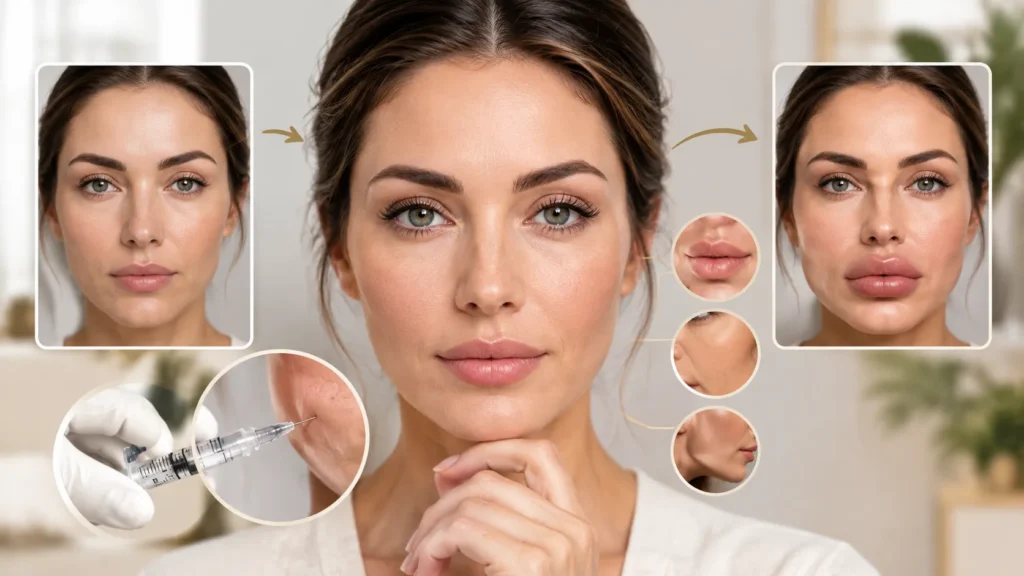
Five choices account for most of the puffy, heavy faces people worry about. Each one is avoidable, and knowing them is the simplest way to learn how to avoid an overfilled look before you ever book.
The most common is too much in one visit. Tissue needs time to settle around new product. A face that takes three syringes in one sitting never gets the chance to show you where it wanted to stop. Swelling starts within minutes, so an injector working on a puffy face can easily keep adding.
One feature can also take all the attention. Lips get fuller, then fuller again, while the chin and cheeks around them stay put. Each round looks fine alone, so nobody stops to compare. A good injector studies your whole face before touching the spot you pointed to.
Then there’s the gel itself. Hyaluronic acid filler, the gel behind most fillers, comes in softer and firmer versions. Soft gel suits areas that move all day, like the lips. Firmer gel holds its shape over bone in the cheeks. Put a firm gel into a mobile lip and it can look stiff every time you talk.
Filler that sits too close to the surface catches light differently than the skin around it, so the area looks shiny or lumpy. Thin skin shows this fastest, since it has little tissue to hide the gel. Filler in the wrong layer can also drift from its spot over the months, which brings you to the migration signs covered below.
The last choice starts on your phone. Filters and front cameras distort features, and some people bring those images in as goals. A face that copies a filter can look fine in a selfie and strange across a dinner table.
Can Too Much Filler Make You Look Older?
Yes, it can. Filler that restores lost volume can take years off. Filler that keeps piling up adds weight the face was never built to carry. The lower face starts to look heavy and square, and once the cheeks widen too, the whole face reads as tired instead of fresh. Extra weight can also pull the lower face downward, the opposite of the lift most people want. People call the extreme version pillow face. A plan that suited you at forty can look heavy at fifty if nobody adjusts it.
Top-Ups That Stack on Old Filler
Filler can outlast the result you see. Hyaluronic acid pulls in water, and that water gives fresh filler much of its early plumpness. As the plumpness fades over the months, your face looks like the filler wore off. Imaging studies have found filler still sitting in faces years after injection. Your body does break it down, just far more slowly than the mirror suggests.
That gap between what you see and what remains is where filler buildup comes from. Book a top-up every six months because the fullness feels gone, and each new syringe lands on product that never left. After a few years, the total in your face can far exceed what any single appointment put there.
The Shift Toward Dissolving and Starting Over
Filler fatigue is the name people now use for that heavy, slightly swollen look after years of layering. The conversation has shifted with it. More people ask whether they need another syringe at all, and fewer ask how much more to add.
Some go further and reset. They clear old filler out, then rebuild with far less. Newer filler responds to dissolving better than product that has sat for years, so a reset gets harder the longer it waits. A pause and a smaller plan often beat an autopilot schedule. Dissolving has limits of its own, and we cover those further down.
Overfilled Signs in the Lips, Cheeks, and Under-Eyes
Overfilling looks different in each area. Overfilled lips give it away first, since they move every time you talk and eat. Cheeks and under-eyes change so slowly that photos may show it long before the mirror does. Temples hide it best, because overfilling there shows mostly from the side.
|
Area |
Natural looks like |
Overfilled looks like |
Usual cause
|
|---|---|---|---|
|
Lips |
Clear border, soft curve, free movement |
Blurred border, upper-lip shelf, fullness above the lip line |
Too much at once, filler migration |
|
Cheeks |
Gentle lift, soft shadow under the cheekbone |
Round at rest, shadow gone, wide mid-face |
Repeat top-ups, volume too far forward |
|
Under-eyes |
Smoother hollow, rested look |
Puffiness, faint bluish tint, heavy lower lids |
Product too shallow, filler holding water |
|
Temples |
Filled hollow, smooth line to the brow |
Bulge beside the eye, visible edge from the side |
Too much volume, placement too shallow |
A Two-Minute Check With Your Phone Camera
Mirrors fool you because you see the same face every morning and adjust to it without noticing. Your phone gives you a fresher look. Stand near a window, hold the camera at eye level, and record yourself talking for thirty seconds. Then laugh at something.
Watch the playback for cheeks that bunch into round pads when you smile, or lips that stay stiff while the rest of your mouth moves. Candid photos from friends help too, since they catch changes selfies hide. Run this check before your next top-up so fresh swelling can’t skew what you see. If you ask a friend who has known your face for years and they hesitate, pay attention to the pause. To see what restored looks like, browse Glo-Med’s before-and-after gallery.
Swelling Versus Too Much Filler in the First Two Weeks
Fresh filler looks bigger than your final result almost every time. Swelling peaks in the first two or three days and eases over the next week or two, and lips and under-eyes take the longest. Judge at two weeks, not the morning after. Day-two lips can look far fuller than they’ll end up.
- Days 1 to 3: Swelling peaks, and tenderness, small bruises, and firm spots all count as normal.
- Week 1: Puffiness fades for most people, though lips can still feel lumpy under your finger.
- Week 2: Filler has softened into the tissue, so the shape you see is close to final.
- Week 4: A lip or under-eye that still looks full now shows product, not swelling.
If you’re wondering whether it’s swelling or your filler is too much, count the days first. Swelling also runs uneven, so one side of a lip can look bigger for a while. Hold off judging symmetry until your two-week visit.
A small bruise fades within a week or so, and concealer can cover it after the first day. A cold pack on day one and a slightly raised head at night both help swelling settle.
Call your injector the same day if pain gets worse instead of better, or if skin turns pale or dusky. That pattern can signal a blocked blood vessel. If you can’t reach anyone, go to urgent care.
How Much Filler Is Too Much for a First Appointment?
There is no syringe count that fits everyone. For most areas, half a syringe to two syringes covers it, and a first appointment should sit near the low end. A small amount is easy to add to later, but taking extra out is a much bigger project.
Where you land in that range depends on the area and how much volume you’ve lost. Small areas like the lips ask for less, and broad areas like the cheeks ask for more.
Hope Bukvich, FNP-C, plans every injectable treatment at Glo-Med, and she’ll recommend less when less is the better call, even if that means a smaller invoice. Since we list filler priced per syringe, a smaller plan costs you less too.
For lips, half a syringe to one syringe is a sensible first amount. If you’re asking how much lip filler you should get for a natural look, start there and decide at your check-in.
Spread the work across visits when you can. Each treatment needs time to settle before the next one goes in, and your two-week check-in from the timeline above is where you decide whether to add anything. A face that gets a small first round and a second look often ends up with less product overall.
Want a starting amount built for your face? Book a filler consultation with Glo-Med before anyone opens a syringe.
Filler Alternatives Worth Considering First
Some people searching for natural-looking dermal fillers need a different treatment entirely. When the concern is shape, skin quality, or thinning spread across the face, another option can do the job and leave no extra volume behind. Matching the tool to the concern prevents a lot of overfilling before it starts.
|
Treatment |
Choose it if |
How results show up
|
|---|---|---|
|
HA filler |
One area lost volume, like hollow temples |
Right away, and adjustable |
|
Lip Flip |
You want more upper lip showing, no added volume |
A subtle outward roll, about $95 |
|
Sculptra |
Volume loss is spread across your face |
Gradually, over the following months |
|
Derma PRP |
You’d rather skip synthetic product under the eyes |
Injected back after a blood draw |
|
SkinVive |
Your skin looks dull or dry, not hollow |
Smoother, more hydrated cheeks |
Sculptra suits a face with widespread volume loss because it rebuilds collagen over weeks and months instead of filling one spot at once. Under the eyes, where overfilling shows fastest, Derma PRP takes a different route. It uses platelets from your own blood, so there’s no synthetic gel to migrate or trigger an allergy.
The Lip Flip earns a closer look if lips make you nervous. It uses a tiny dose of neurotoxin to relax the muscle that pulls your upper lip downward, so more of the lip shows without adding anything. Choosing between a lip flip or lip filler for a natural look comes down to shape versus volume, and our guide on what a lip flip does differently walks through both.
Lines that only show when you move, like forehead lines and crow’s feet, call for a different fix. Filler there adds weight without calming the muscle that creases the skin. A neurotoxin handles them, and some people use both, each for its own job. Our piece on keeping Botox from looking frozen explains how to get that part right.
Can Overfilled Filler Be Dissolved?
Yes, if it’s hyaluronic acid filler. An enzyme called hyaluronidase breaks the gel down, and most people see a change within a day or two. It works well, but it has limits, and knowing them helps you decide whether dissolving filler makes sense for you.
The appointment itself is quick. Your injector places small amounts of the enzyme into the area, and some people notice a change within hours. Swelling for a day or two is common, so the area may look worse before it settles. Tell your injector about any allergies first, since some people react to the enzyme itself.

The enzyme can’t tell injected gel from the hyaluronic acid your skin makes on its own. After dissolving, some people go through a deflated stretch where the area looks flatter than it did before any filler. Your skin rebuilds its own supply with time, but the stretch can feel long. The enzyme also spreads a little past where it goes in, so it works better as a reset than a fine-tuning tool. Some injectors dissolve in small stages for this reason, so you can see progress before committing to more.
Older filler can be stubborn. Product that has sat in a face for years often needs more than one session, spaced apart, and small amounts may stay behind.
Sculptra does not dissolve this way, and neither does any filler that isn’t hyaluronic acid. Build slowly with those from the first visit.
Waiting it out is a fair option too. If the extra volume is small and recent, pausing treatment and letting your body clear it can beat an enzyme. What you choose depends on which product you have and how long it’s been in.
Consultation Questions That Reveal an Injector’s Approach
A short list of questions tells you more about an injector than any photo. Ask them before you book, and listen to how the answers sound. Natural-looking filler results come from injectors who answer plainly and never rush you toward a syringe.
Start with your filler history. Write down every product you know of, the dates, the areas, and roughly how many syringes. Old receipts and patient portals help fill the gaps, and the clinic that treated you can often pull the product name from your chart. Bring it to your consultation, because new product shouldn’t land on top of old product nobody accounted for.
- Ask where they see volume loss on your face. A good answer names specific spots, including some you never mentioned, and ties them to your concern.
- “How much would you start with?” should get a small number and a clear reason. Several syringes at a first visit call for a second opinion.
- Which gel would you use here, and why? A good answer matches soft gel to moving areas and firmer gel to structural ones, and names the reason.
- Before-and-after photos matter only when they show faces like yours. Look for rested, subtle results rather than dramatic makeovers that change the whole face.
- What happens if you dislike the result? A clear injector walks you through the check-in and touch-up options, and explains what reversing your specific product would involve.
- Finally, ask whether they’d ever tell you to skip filler. An easy yes, backed by an example, says more than anything written on their website.
Two red flags should end the conversation. One is an injector who reaches for a syringe before asking about past filler. The other is pressure to book today for a special price.
Bring your filler history and your list of questions. Call 769-267-5586 to set up your consultation.
Natural Filler Results With Hope at Glo-Med in Flowood
The friend with the slowly rounding cheeks needed someone to count what was already in her face before adding more.
Every filler plan at Glo-Med begins with a one-on-one consultation, and Hope handles every injectable plan herself. We see people from across the Jackson metro, including Brandon and Madison, and our Google reviews hold a 5.0 rating across more than 40 reviews. One client described lip filler that came out fuller without looking overdone, and that’s the standard we hold natural-looking dermal fillers to.
Bring the photo that made you nervous, or the one that made you curious. You’ll find us at 320 Belle Meade Pt., Ste. C, Flowood, MS 39232, just off Lakeland Drive, open Monday through Friday from 8:30 to 5, with Saturday by appointment. You can also call 769-267-5586.
Ready to see a restored result on your own face? Schedule your visit at Glo-Med Aesthetics & Wellness and start with a conversation.
This article gives general information, not medical advice. An in-person consultation tells you what fits your face.
Alternate intro (swap in for the two opening paragraphs above)
You had filler somewhere else, and lately your face looks a little off in photos. Natural-looking dermal fillers were the goal. Now you can’t tell if what you see is swelling, buildup, or simply too much product.
That uncertainty brings a lot of people into our chair for the first time. An overfilled look has causes you can name and signs you can check at home. The fixes run from simply waiting to dissolving, depending on what’s in there and how long it’s been. Picking the right one starts with understanding how filler behaves after it goes in.