
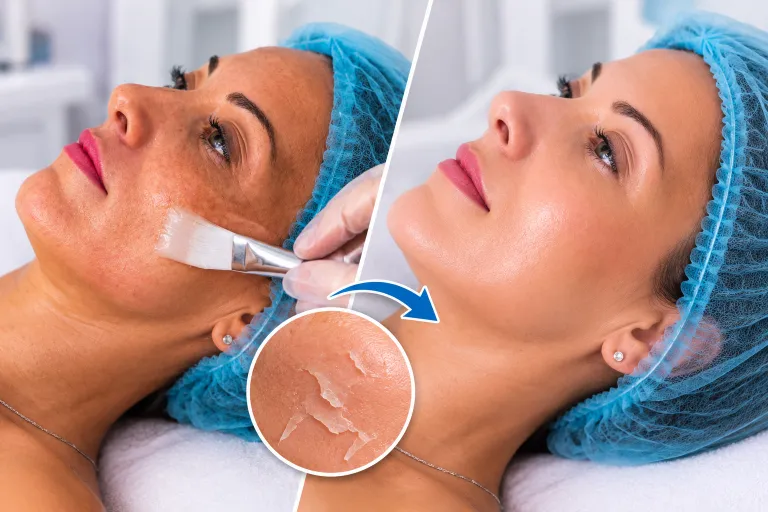
A chemical peel for dull skin removes the dead cells that build up on the surface of your face. Once that layer comes off, the skin underneath reflects light again and looks brighter. Dullness creeps in slowly. Foundation starts catching on dry patches around your nose, and photos under office lights look gray. Serums that worked last year barely help now.
In most cases, the problem sits in that top layer of dead cells. Dullness can also come from dry skin, sun damage, or daily habits, and a peel only addresses part of that. Finding the cause first keeps you from paying for the wrong treatment.
Why Skin Starts Looking Dull
Healthy skin has a smooth surface that bounces light back evenly. Dull skin comes from anything that makes that surface rough, dry, or blotchy. Dead cells, dehydration, and sun damage cause most of it. Age makes each of them worse.
| Cause | What you notice | Does a peel help? | What else helps |
| Dead cell buildup | Flat, rough skin with no glow | Yes, directly | Gentle exfoliation |
| Dryness or dehydration | Tight skin and fine dry lines | Partly | Moisturizer and water |
| Sun damage | Brown spots and uneven tone | Yes, over a series | Daily sunscreen |
| Over-exfoliating | Red, stinging, dull skin | Not until the skin calms | A break from strong products |
| Slower renewal with age | Dullness plus fine lines | Yes, over a series | A steady routine |
Dead Skin Cell Buildup
Your skin replaces its surface cells on a steady cycle called skin cell turnover. New cells form underneath and push the old ones up and off. In your twenties, that cycle moves quickly. By your forties, it slows down, and dead cells stay on your face longer.
Those leftover cells pile into a thin, uneven film. The film scatters light, so even freshly washed skin looks dim. Faint roughness under your fingertips can signal that buildup plays a part. Pores can look larger too, since dead cells collect around their edges.
Dry or Dehydrated Skin
Dryness means your skin lacks oil. Dehydration means it lacks water. Either one leaves fine, crinkly lines across the cheeks and forehead. Those lines soften for a while after you apply moisturizer.
A peel does only part of the work here. Clearing away the flaky surface lets moisturizer sink in properly, but a peel cannot put water back into the skin. Hot showers and stripping foam cleansers make the problem worse. They wear down the skin barrier, the outer layer that holds moisture in.
Sun Damage and Age
Sun exposure adds up over the years. It leaves brown spots, freckling and blotchy patches across the cheeks and forehead. That unevenness can make a face look tired even after a full night’s sleep.
Peels fade some of this discoloration, especially over a series. Deeper or stubborn patches take more sessions to fade than surface freckling. Sunscreen decides whether the improvement lasts. Newly revealed skin burns more easily for a few weeks after a peel. One weekend at the lake without SPF can bring the spots straight back.
What a Chemical Peel Does to Dull Skin
A chemical peel is an exfoliating solution that a trained provider applies to clean skin. It loosens the bonds holding dead cells to the surface. Over the next several days, the treated layer dries and sheds. Smoother skin shows through underneath, and light reflects off it evenly again.
Peel solutions use acids such as glycolic, lactic or salicylic acid. Each acid behaves a little differently on the skin. Your provider chooses the blend based on your skin type and the result you want.
The appointment itself is short. Most people feel warmth or tingling while the solution sits on the skin. Your provider removes it and finishes with a calming moisturizer and sunscreen. Expect to leave a little pink or shiny.
The benefits of chemical peels for dull skin go beyond brightness. Makeup goes on more smoothly, and shallow dark spots lighten as the old layer sheds. A series of peels can address uneven tone and rough texture more than a single visit.
Results vary from person to person, and every skin type responds a little differently. A chemical peel for dull skin works best as one part of a plan built around your own skin.
Not sure which kind of dullness you have? Book a free skin assessment at Glo Medical Aesthetic and Wellness and find out.
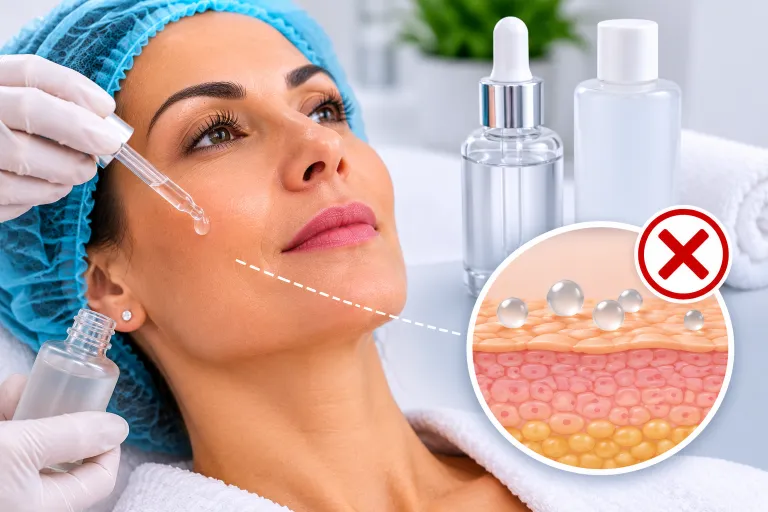
Why Serums and Toners Stop Short
Brands design store-bought skincare for daily at-home use, and they keep it mild on purpose. A good routine keeps skin healthy. It cannot clear months of buildup that has already settled on the face. Spending more does not close that gap. A sixty-dollar serum and a drugstore toner stay within the same safe limits for home use.
A solid home routine still matters, and it makes any peel work better. Keep it short: a gentle cleanser, a moisturizer that suits your skin type and sunscreen every morning. Add one active product at a time, and give each one a few weeks before you judge it. Skin that gets five new products in a month has no chance to settle. It often looks worse for it.
Home Exfoliants Compared With a Professional Peel
Glycolic acid and salicylic acid show up in plenty of toners and pads. Both loosen dead cells in small doses spread over weeks. Brands keep the strength low because nobody checks your skin before you use them.
A professional peel starts with a provider looking at your skin up close. The provider then picks a peel type and strength to match what they see. A trained professional treats your whole face in one visit and monitors your skin’s reaction.
Over-Exfoliating and Retinol
Using a scrub, an acid toner and retinol in the same week strips the skin barrier. The face turns red, tight and stinging, and it looks duller than before. People who take their skincare most seriously run into this the most.
Before a peel, give your provider a list of every product you use, including prescription creams.Retinol and strong acid toners need a short break beforehand, and your provider gives you the exact dates. If your skin is already irritated or breaking out, a gentle facial may be an easier place to start.
Choosing the Right Peel Depth
Peels come in light, medium and deep strengths. For dull skin, light peels do most of the work. They act on the very top layer and cause only light flaking.
Medium peels go deeper and help with dark spots, uneven tone, and fine lines. The skin peels more visibly for several days afterward. Deep peels involve a long recovery, and dullness alone almost never calls for one.
Stronger does not mean better here. The right depth depends on your skin type, your skin tone and how much downtime your schedule allows. Your provider makes that call at the skin assessment.
A first peel usually starts gently. Your provider monitors how your skin responds, then adjusts the next session if needed. That step-by-step approach suits dull skin well, since brightness builds with each visit without long stretches of downtime.
Is a Chemical Peel Right for Your Skin?
Chemical peels for dull skin suit a wide range of ages and skin types. Age, skin tone and health history shape which peel fits. The skin assessment covers each of these before anyone books a treatment.
Mature Skin and Uneven Skin Tone
Dullness in your forties and fifties often comes with brown spots, rough patches, and fine lines around the eyes. Uneven skin tone can make the whole face look tired, even with good makeup.
Light peels suit mature skin well. They brighten the surface without much downtime, and a series chips away at spots and texture over several months. Older skin also tends to be drier, so your provider can keep the barrier comfortable throughout. Mention any recent injectables or microneedling sessions, since spacing between treatments matters. Hormone changes around menopause can also shift how skin reacts, so share those details with your provider too.
Are Chemical Peels Safe for Darker Skin?
Yes, with the right peel and careful aftercare. Medium and deep skin tones can become more pigmented when the skin is irritated. An overly strong peel can leave dark marks behind. Some people avoid peels for that reason alone.
A careful assessment and a gentle starting strength lower that risk. Strict sunscreen use after treatment lowers it further. Picking at flakes increases the risk, so leaving the skin alone matters even more for deeper skin tones.
When to Wait
Hold off on a peel if you are pregnant or took prescription acne pills recently. If you have an open cold sore, cut, or rash on your face, wait, too. People who get cold sores often should say so at the assessment, because a peel can trigger one. Bring your full medication list to that visit. A short delay costs you a few weeks. Treating skin that isn’t ready can cost a lot more in redness and dark marks.
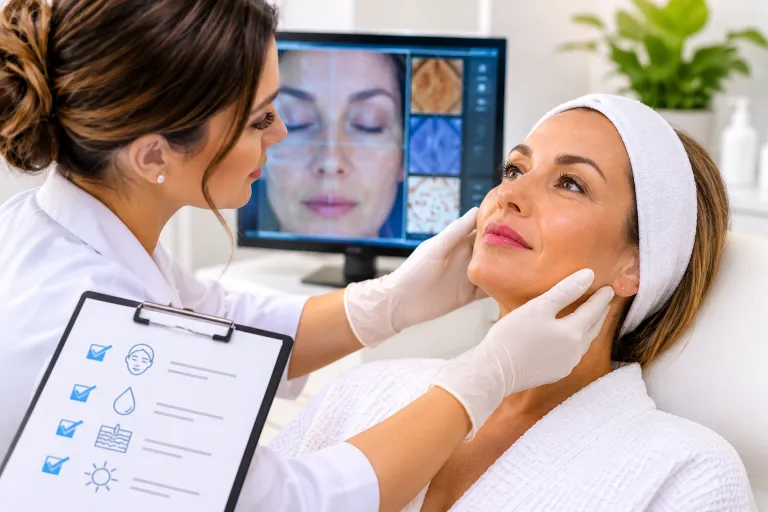
What Happens at Your Free Skin Assessment
Glo Medical Aesthetic and Wellness offers a free consultation and a free skin assessment before any peel. The visit opens with a conversation about what bothers you when you look in the mirror. Your provider then checks texture, tone, dryness and any active breakouts up close.
Bring a list of every product, medication and supplement you take. Photos of past reactions help too, if you have them saved on your phone. Your provider will also ask about your sun habits and past skin reactions. Mention anything coming up on your calendar, like a wedding or a vacation.
Licensed medical professionals perform treatments at the clinic under the oversight of a medical director, and the clinic uses FDA-approved products. You leave knowing which peel suits your skin and whether a series makes sense.
Sometimes a peel is not the right first step. Very sensitive or irritated skin may do better with a facial first. Deep texture concerns may point toward microneedling instead. The assessment exists to sort that out before you spend anything.
Bring your product list and your questions. Call (769) 267-5586 to book your free consultation.
Chemical Peel Recovery After a Light Peel
Recovery after a light chemical peel stays mild for most people. Right after treatment, your skin may look pink or slightly shiny. It feels tight, a lot like a mild sunburn.
When the Flaking Starts and Stops
Fine flaking appears two or three days later, mostly around the mouth, nose, and chin. On a light peel, it settles within about a week. Leave the flakes alone during that time.
Pulling them off early leaves pink patches. On deeper skin tones, it can also leave dark marks. A plain moisturizer keeps the flakes soft and less noticeable. Sleeping on a clean pillowcase and keeping your hands off your face also helps.
Makeup and Work After a Peel
Most people return to work the next day. Coworkers see slightly shiny skin and little else until the flaking phase begins. If your job involves heat, steam or long hours outdoors, ask your provider about timing before you book. Scheduling a peel before a weekend gives the flakiest days some privacy.
You can wear makeup after a chemical peel once your provider gives the okay. For most people, that is about 24 hours after treatment. Mineral makeup and clean brushes irritate fresh skin the least. Skip anything with scrubbing beads or strong acids until the peeling stops.
Planning a Chemical Peel Before an Event
Weddings, reunions and holiday photos are common reasons to plan a peel. A chemical peel before an event needs lead time. The flaking has to finish, and the new skin has to settle. Booking during the same week as the event is the one mistake to avoid. For a light peel, schedule it at least two weeks before the date.
A first-ever peel needs even more room. Nobody knows yet how your skin will react. A trial peel a few months ahead lets you see full recovery with low stakes.
In the days before treatment, skip new skin products, facial waxing and long afternoons in the sun. On the day of the event, a lighter foundation and a hydrating primer sit best on fresh skin. Heavy full-coverage formulas can cling to any last dry spots.
Peel, Facial or Microneedling for Dull Skin
A peel goes deeper than a facial. It suits dullness from dead-cell buildup and uneven tone, and it can cause some flaking.
Facials offer a quicker refresh with no peeling. They make sense before a same-week event, for skin too sensitive for acids, and as upkeep between peels.
Microneedling targets a different problem. It works on rough texture and acne scars more than brightness. For deeper texture concerns, Glo Medical Aesthetic and Wellness also offers Scarlet RF microneedling. These treatments can be combined over time, with spacing set at the assessment.
The right choice depends on what bothers you most. Skin that looks flat and feels rough points to a peel. If your skin feels tight and dehydrated before an event, a facial is the better choice. Visible scars or deep texture point to microneedling, and the assessment confirms which one fits.
Keeping Your Results After a Chemical Peel
Results from a chemical peel for dull skin last longer when your daily routine protects them. Sleep, water, and not smoking show up on your face within weeks. The first week shapes how the new skin heals. Sunscreen decides how long the brightness holds after that.
Chemical Peel Aftercare in the First Week
Gentle care works best right after treatment. Wash with a fragrance-free cleanser and lukewarm water. Apply a plain moisturizer whenever your skin feels tight, and use broad-spectrum sunscreen every morning, even on cloudy days.
Retinol, scrubs and acid toners stay on the shelf until your provider says otherwise. Chemical peel aftercare at the clinic includes follow-up guidance, depending on the treatment you receive.
Heavy workouts, saunas and hot yoga can wait a little. Sweat and heat can sting freshly peeled skin and leave it red longer. A gentle walk is fine. Ask your provider when you can resume your usual routine.
How Often to Book Another Peel
Light peels work best as a series. A typical plan is one peel every four to six weeks for a few sessions, then occasional maintenance peels. Your provider sets your schedule at the assessment.
Mississippi summers bring long hours of strong sun. Many people start a peel series in fall or winter for that reason. Time outdoors drops, and it’s easier to keep up daily sunscreen. Tone evens out gradually across the series. A facial between peels keeps the skin clean and hydrated without adding more flaking.
Chemical Peels in Flowood for the Jackson Metro
Glo Medical Aesthetic and Wellness is a med spa in Flowood, MS, at 320 Belle Meade Point, Flowood, MS 39232. Flowood sits in Rankin County, a short drive from Hinds and Madison counties.
Looking for a chemical peel near Jackson, MS? The clinic is an easy drive from the city, as well as from Madison, Ridgeland, Brandon and Pearl. Clinton, Byram, Canton and Richland sit close by as well. You can book online through the clinic’s booking page or call the front desk to schedule an appointment. The clinic offers Cherry Financing for treatment plans. The clinic does not accept insurance, and insurance plans do not cover cosmetic peels.
Your Next Step Toward Brighter Skin
Gray, tired-looking skin in photos has a cause you can find. For many people, that cause is the layer of dead cells a chemical peel removes. The free assessment shows whether that applies to you. Find out which peel suits your skin. Call Glo Medical Aesthetic and Wellness at (769) 267-5586 or book your free skin assessment online.